

Olympic fencing is a lightning-fast, heart-pounding spectacle that will leave you on the edge of your seat. It’s like physical chess at 90 mph, where split-second decisions mean the difference between glory and defeat.
With the world’s attention turning to Paris for the upcoming Olympic Games, get ready to be mesmerized by the glint of steel, the clash of blades, and the awe-inspiring displays of athleticism that would make even superheroes envious.
But don’t worry if you can’t tell a foil from a sabre or think “right of way” is just a traffic rule. We’ve got you covered with this comprehensive guide that will take you from fencing novice to armchair fencing expert and will allow you to enjoy watching fencing at the Olympics and discuss it with your friends as if you have fenced for ages.
This guide is essential for anyone looking to appreciate the intricacies of Olympic fencing. Fencing is a complex sport with unique rules and terminology that can be challenging for newcomers to grasp. Moreover, Olympic fencing differs significantly from other competitions in both format and the immense pressure placed on athletes, making it a spectacle unto itself. By understanding these nuances, you’ll greatly enhance your viewing experience, allowing you to fully appreciate the skill, strategy, and drama unfolding before you.
To make the most of this Guide to Olympic Fencing, we recommend using the table of contents to navigate to sections that particularly interest you or address specific questions you might have. For a comprehensive understanding of the sport, reading the guide sequentially will provide you with a solid foundation of knowledge. Additionally, keep this guide handy during Olympic broadcasts – it’s an excellent resource for quick clarification on rules, terminology, or format details that may arise as you watch the thrilling fencing matches unfold.
You can read each paragraph as a stand-alone, but for deeper knowledge, we recommend you follow the links, that are marked “for expert reading” below. Then, you would really impress everybody.
Okay, let’s dive in.
Table of Contents
- Fencing Rules
- Fencing strips and its rules
- The role of the fencing referee
- Specifics of the Olympic Fencing Venue
- Olympic Fencing Tournament Format – Individual
- Olympic Fencing Tournament Format – Team
- How to maximize watching enjoyment
- Special focus on footwork
- Olympic Fencing Events Schedule
- Major Players
The Nitty-Gritty: Fencing Rules Without the Yawn
Let’s face it – sports rules can be about as exciting as watching paint dry. But fencing rules? They’re the secret sauce that makes this sport sizzle. So buckle up, because we’re diving into the wild world of pointy weapons and fancy footwork!
The Three Musketeers of Fencing: Foil, Épée, and Sabre
- Foil: The Precise Prima Donna
- Target area: Torso only (including back), no arms or head
- Scoring: Only with the tip of the weapon (stubbing weapon)
- Right of way: Applies (more on this later)
- Fun fact: Foil was originally a training weapon for dueling, which explains its rather specific target area
- Sabre: The Speed Demon
- Target area: Everything above the waist, including arms and head
- Scoring: With both the tip and the edge of the blade (slashing weapon)
- Right of way: Applies
- Fun fact: Sabre originated from cavalry warfare. Next time you watch it, imagine the fencers on horses!
- Épée: The Ultimate Truth
- Target area: Entire body
- Scoring: Only with the tip of the weapon (stubbing weapon)
- Right of way: Doesn’t apply
- Fun fact: Épée is the closest to actual dueling. If you’re ever challenged to a duel (not recommended and illegal), this is your weapon of choice
For expert reading: how the rules and target area affect each weapon.
The “Right of Way” Conundrum
Ah, right of way. The rule that makes foil and sabre fencers pull their hair out and épée fencers snicker. Here’s how it works in the most simplified terms:
- The fencer who starts an attack first has the right of way
- If the attack fails or is parried (blocked), right of way switches to the other fencer
- In simultaneous attacks, the referee has to decide who started first (good luck with that at full speed!)
Think of it like a very aggressive game of “Simon Says.” If Simon (the attacker) says to do something, you have to defend yourself before you can attack back.
For expert reading: a three-part post that discusses Right of Way in a great detail. You’ll become a real expert after you read it.
Scoring: It’s Electric!
Gone are the days of gentlemanly acknowledgment of hits (well, almost – in some cases fencers do acknowledge hit/no hits if referee made a mistake, which still can happen). Modern Olympic fencing uses electrical scoring systems:
- In Foil and Sabre fencers wear conductive jackets (called lame) connected to a wire on top of their protective uniform.
- When the tip of the weapon hits with enough force (in foil and epee), it completes a circuit. In sabre, the entire blade is conductive (low voltage, don’t worry of electric shock!) and its contact with lame closes the circuit
- Lights flash, buzzers sound, and the crowd goes wild (or politely applausts, this is fencing after all)
In épée, both lights can go on for a double touch. In foil and sabre, if both lights go on, the referee has to decide who had right of way. It’s like being a traffic cop, but with swords involved.
The Lights: Fencing’s Disco
- Green light: Hit for a fencer on the right
- Red light: Hit for a fencer on the left
- White light in foil: Off-target hit (target is lame)
- Both lights in épée: Double touch, both score!
No, it’s not a disco. Those flashing lights tell you when a hit has been scored. When a light (of any color) goes off, the referee stops the bout, decipher what they just saw and make a decision. A decision can be: a) touch was score and awarded to one of the fencers (in all weapons) or to both (in epee only); or b) no touch is awarded.
For expert reading: how the scoring machine lights work
Cards and Penalties in Fencing
In fencing, like in many other sports, referees use a card system to enforce rules, maintain order on the strip, and ensure fair play. Understanding these cards is crucial for following the sport at the Olympic level. Cards can significantly alter the course of a bout. Experienced fencers often use their knowledge of the rules and card system strategically
Yellow Card
- First offense warning (for example, turning back to the opponent during an active fencing)
- No direct penalty, but sets up for harsher penalties if repeated
Red Card
- Results in a touch awarded to the opponent
- Given for more serious offenses (for example, hitting opponent in the mask with a guard) or repeated violations after a yellow card
Black Card
- Disqualification from the competition – this is very severe, as it might disqualify fencer to participate in official tournaments for many months
- Reserved for the most severe infractions or unsportsmanlike conduct
P-Card (Passivity)
- Specific to non-combativity situations – this is relatively new rule that was adopted a few years ago to improve watchability and dynamics of the sport
- Used when both fencers are overly passive and not engaging in offensive actions – i.e., no touch was made during one minute of fencing by neither of opposing players.
- First instance: P-Yellow card for both fencers/teams (warning)
- Second instance: P-Red card for both fencers/teams – point penalty is awarded to each opponent
- Third instance: P-Black, which means that a fencer with higher score or highed initial seeding (if score is tied) wins
- P-cards introduce a compelling strategic element to fencing, creating incredibly engaging matches to watch, as they force the fencer at a disadvantage to take calculated risks, leading to sudden bursts of aggressive and innovative tactics in otherwise cautious bouts.
Understanding the card system (both penalty cards and passivity cards) helps spectators appreciate the nuances of rule enforcement and the strategic decisions fencers make to avoid penalties while maximizing their competitive advantage.
This format ensures that every match is crucial, with no room for error as the tournament progresses. It also allows spectators to follow the progression of the tournament easily, building excitement towards the medal matches.
For expert reading: fencing penalties 101 and passivity rules
The Strip: Fencing’s Catwalk
The strip (in the US), or piste (in the rest of the world), is the stage where all the fencing action unfolds. Far from being just a simple strip of floor, it’s a carefully designed metallic arena that plays a crucial role in the sport.
Dimensions and Layout
- Length: 14 meters (about 46 feet)
- Width: 1.5 meters (about 5 feet)
- Surface: Usually made of metal or a conductive material
- Markings: Several important lines are clearly visible on the strip
Key Markings
- Center Line: Divides the strip in half, where fencers start each bout
- On-Guard Lines: 2 meters on each side of the center line, where fencers return after each point
- Warning Lines: 2 meters from each end of the strip, alerting fencers they’re nearing the end
- Rear Limit Lines: At each end of the strip, crossing this is a penalty
Boundary Rules
- Fencers must stay within the lateral boundaries of the strip
- Crossing the side boundary with one foot results in the bout being halted
- Crossing the rear limit line with both feet results in a point for the opponent
Strategic Implications
- The narrow width forces fencers into linear movements, emphasizing footwork and timing
- The length allows for advances and retreats, but also punishes excessive retreating
- Awareness of position on the piste is crucial for tactical advantage
Technological Aspects
- In foil, the piste is conductive and connected to the scoring system
- This allows for the detection of floor touches, which don’t count as valid hits
Watch as fencers dance along this narrow stage, always aware of its boundaries. Fencers must balance aggression with spatial awareness, knowing that a misplaced step could cost them a point or tactical advantage.
The strip transforms fencing from a free-form duel into a strategic contest of position and timing. It’s not just about who can land a hit, but who can control this linear battlefield to their advantage. As you watch Olympic fencing, pay attention to how the best fencers in the world use every centimeter of the strip to set up their attacks and defenses, turning this simple strip into a complex arena of strategy and skill.
For expert reading: different rules about stepping out of strip boundaries
The Referee: The Unsung Hero of the Piste
In the fast-paced world of Olympic fencing, the referee plays a crucial role that goes far beyond simply calling “En garde!” and “Allez!” Let’s dive into the complex and demanding job of a fencing referee. Their job is very difficult, precise, demanding and often unthankful, yet, very important. The following list is a very short list of their responsibilities, but about each one full length blogs can easily be written.
Split-Second Decision Making
- Referees must process and judge actions that occur in fractions of a second
- They rely on years of experience and intensive training to make accurate calls
- Even with electronic scoring, the referee’s judgment is often the final word
Mastering the Rules
- Proficient in the distinct rule sets for foil, épée, and sabre
- Must apply complex concepts like “right of way” in foil and sabre
- Understands the nuances of valid and invalid touches for each weapon
Determining Right of Way
- In foil and sabre, the referee must decide which fencer has the right to attack
- This involves tracking the initiative of each fencer throughout the exchange
- The referee’s call can often be the difference between a point awarded or denied
Maintaining Order and Safety
- Ensures fencers adhere to proper conduct and sportsmanship
- Prevents dangerous play that could lead to injuries
- Has the authority to issue warnings, penalties, and even disqualifications
.Communication and Clarity
- Uses standardized hand signals to communicate decisions clearly
- Must explain complex rulings to fencers, coaches, and sometimes the audience
- Often required to work in multiple languages at international competitions
Working with Technology
- Interfaces with electronic scoring systems to confirm or overrule automatic scores
- Uses video replay in high-level competitions to review close or disputed calls
- Must balance reliance on technology with their own judgment and the flow of the match
Pressure and Scrutiny
- Makes decisions under intense pressure from fencers, coaches, and spectators
- Calls can be scrutinized and challenged, especially in high-stakes Olympic bouts
- Must maintain composure and authority even when faced with disagreement or controversy
Physical Demands
- Remains alert and focused for long periods, often officiating numerous bouts in a day
- Must keep up with the fencers’ movements, sometimes requiring quick reflexes themselves
- Maintains a commanding presence on the piste throughout the competition
This brave soul has to keep up with action that happens faster than you can blink, making decisions that can alter the course of Olympic dreams. They’re the ones who determine right of way, ensure fair play, and keep the fencers from turning a sophisticated sport into a Renaissance fair brawl.
The next time you watch Olympic fencing, spare a thought for the referee. They’re not just observers but active participants in the drama unfolding on the piste. Their expertise, judgment, and composure under pressure are as crucial to the integrity of the sport as the skill of the fencers themselves. Without these unsung heroes, fencing would be little more than two people poking each other with swords!
For expert reading: The best place to start understanding the sport of fencing is to watch referees’ hand signals, that tell it all.
Olympic Fencing Venue: A Unique Battleground
The Olympic fencing venue is a spectacle unlike any other fencing competition, designed to showcase the sport at its highest level while accommodating the needs of athletes, officials, and spectators. It setup differently from any other fencing competition during the season because this is the only time when fencing is broadcasted to the whole world and people who aren’t familiar with the sport (like you, my dear reader) can experience the sport at its best.
Main Competition Area
- Features 5 official strips, each with a distinct identity:
- 4 Colored strips: Red, Green, Yellow, and Blue
- 1 Final strip: The centerpiece for medal matches
- Colored strips are used for:
- Preliminary rounds
- Table of 64, 32, and 16
- Quarterfinals
- Final strip hosts:
- Semifinals (in Individual events only)
- Bronze medal match
- Gold medal match
Strip Progression
- Fencers start on colored strips and progress towards the final strip, with semi-final, bronze and final matches are on the final strip to maximize the broadcasting opportunities
- This setup creates a visual representation of the tournament’s progression
Call Rooms: The Pre-Battle Chambers
- Located adjacent to the main competition area, just outside of the main gym
- Fencers report here before their matches
- Functions:
- Equipment checks are performed and weapons are tested for compliance
- Ensures all participants are ready and compliant before stepping onto the piste in a pre-defined order and TV-broadcast-ready
Warm-Up and Training Area
- Separate room not visible to TV cameras
- Contains multiple practice strips
- Purpose:
- Allows fencers to warm up before rounds
- Provides space for last-minute training and adjustments
- Serves as a preparation area throughout the competition
- Occasionally featured in behind-the-scenes interviews or reports
Spectator Experience
- Seating arranged for optimal viewing of all strips
- Large screens display scores and replay key moments
- Commentary booths for broadcasters are strategically placed
Technical Infrastructure
- Advanced scoring systems for each strip
- Video replay equipment for every strip and TV monitors across the venue
- Dedicated areas for judges and technical officials
This unique setup transforms the fencing venue into a true Olympic arena. The progression from colored strips to the final strip creates a narrative of advancement, building excitement as the competition unfolds. Meanwhile, the hidden warm-up areas and call rooms ensure that athletes can prepare in peace before stepping into the spotlight.
The Olympic fencing venue is more than just a competition space – it’s a carefully designed environment that balances the needs of athletes, officials, and spectators, all while creating a dramatic stage for one of the Games’ most thrilling sports.
Olympic Fencing Tournament Format
The Olympic Games fencing competition has a unique format that sets it apart from all other fencing tournaments in the world.
Distinctive Olympic Format
Unlike other major fencing competitions, the Olympic Games do not include a preliminary round or pool phase. Instead, the tournament begins directly with a knockout format, making it the only competition of its kind in the fencing world.
Individual Event Structure
- Table of 64
- The competition starts with an incomplete table of 64
- Some fencers may receive byes based on their ranking
- Subsequent Rounds
- Table of 32
- Table of 16
- Quarterfinals (8 fencers)
- Semifinals (4 fencers)
- Bronze Medal Match (between semifinal losers)
- Gold Medal Match (between semifinal winners)
Bout Format
- All bouts in the individual events are fenced to 15 touches
- Maximum time limit of 9 minutes (3 periods of 3 minutes each)
- One-minute break between periods
Progression
- Winners of each bout progress to the next round
- Losers are eliminated from the competition
- Exception: Semifinal losers fence for the bronze medal
Seeding
- Initial seeding is based on the FIE (International Fencing Federation) Official Ranking
- This ranking determines the initial table placement and potential byes
Schedule
- Each weapon event (men’s and women’s) is typically completed in a single day
- The schedule alternates between individual and team events throughout the Olympic fencing program
This direct elimination format from the outset creates a high-stakes environment from the very first bout, distinguishing Olympic fencing from other international competitions and adding to the intensity and prestige of the event.
For expert reading: more about Olympic Qualification and tournament format
Olympic Fencing Team Events
The inclusion of full team events in the Olympic Games has added a new dimension to fencing competition, showcasing not just individual skill but also national depth and teamwork.
Team Composition
- Each team consists of 3 active fencers and 1 alternate
- The alternate can only substitute in case of injury or illness or strategic replacement
- Important: If the alternate doesn’t fence, they are not considered an Olympian and won’t receive a medal if their team medals
Qualification
- 8 teams qualify for each weapon category (men’s and women’s foil, épée, and sabre)
- Qualification is based on team rankings and continental representation
- This is only the second Olympics to feature full team events in all six fencing disciplines
Match Format
- Each team match consists of 9 bouts
- Every fencer on one team faces each fencer on the opposing team once
- Bouts are fenced to 5 touches or for 3 minutes, whichever comes first
- The score is cumulative throughout all 9 bouts
- The winning team is the first to reach 45 points or the team with the highest score after the final bout
In team fencing events, each team’s fencers are assigned numbers:
- First team (randomly chosen) is assigned numbers: 1, 2, 3
- Second team is assigned numbers: 4, 5, 6
The official order of bouts is as follows:
- 3 vs 6
- 1 vs 5
- 2 vs 4
- 1 vs 6
- 3 vs 4
- 2 vs 5
- 1 vs 4
- 2 vs 6
- 3 vs 5
This predetermined order ensures that each fencer on one team faces every fencer on the opposing team exactly once. The sequence is designed to create a balanced and fair competition, allowing for strategic placement of fencers based on their strengths and the current score.
Scoring Progression
- First bout ends at 5 points
- Second bout starts at 5 and goes to 10
- Third bout starts at 10 and goes to 15
- This continues until one team reaches 45 points
Substitutions
- The alternate may replace a team member once during the match
- This can only occur between bouts, not during a bout
- Once a fencer is substituted out, they cannot return for the remainder of the match
Strategy
- Team coaches must consider individual strengths and weaknesses when deciding bout order based on the numbers assigned to their team
- The ability to come from behind or extend a lead becomes crucial in later bouts
- Psychology plays a significant role, as momentum can shift dramatically
Tournament Structure
- Direct elimination format
- Quarterfinals, semifinals, and medal matches
Medal Matches
- Bronze medal match between losing semifinalists
- Gold medal match between winning semifinalists
Venue Setup
- Team events typically use the colored pistes for early rounds
- Medal matches are held on the central piste
Historical Context
- Team events have been part of the Olympics since 1904, but not consistently in all weapons
- The 2020 Tokyo Olympics (held in 2021) was the first to feature team events in all six disciplines (foil/epee/sabre, men/women)
- Paris 2024 will continue this full complement of team events
Impact on Fencing
- Encourages countries to develop depth in their fencing programs
- Provides more opportunities for fencers to become Olympians
- Adds an element of national pride and teamwork to the individual nature of fencing
The team events in Olympic fencing offer a unique blend of individual skill and team strategy, creating some of the most exciting moments in the sport. They showcase the depth of fencing talent in each country and provide a different kind of drama compared to the individual events.
For expert reading: more about team fencing
How to Watch: Tips for Maximum Enjoyment
Now that you’re armed (pun intended) with all this knowledge, here are some tips to make your Olympic fencing viewing experience top-notch:
- Focus on Footwork: It’s not all about the stabby end of the sword. Watch how fencers move their feet to set up attacks.
- Listen to the Sounds: The clash of blades, the stomping of feet, and even the occasional yell can tell you a lot about what’s happening.
- Watch for Feints: Fencers often fake attacks to draw out their opponents. It’s like a game of chicken, but with swords.
- Appreciate the Speed: These athletes are moving faster than most of us can think. Don’t worry if you can’t follow every action – even the referees sometimes need video replay!
- Enjoy the Drama: Fencing has all the tension of a thriller movie, but with real athletic prowess on display.
- Learn the Referee’s Signals: They’ll signal who scored and why. It’s like a very specific form of charades.
- Don’t Ignore the Coaches: Watch their reactions. They often see things we don’t and their face says it all.
- Embrace the Passion: Fencers might look calm, but there’s intense emotion under those masks. Watch for fist pumps, yells of triumph, or the occasional frustrated stomp.
For expert reading: some additional tips on how to watch fencing
Footwork: The Foundation of Fencing Excellence
While the clashing of blades often captures the audience’s attention, seasoned fencing enthusiasts and experts understand that footwork is the true cornerstone of the sport. Footwork in fencing is not merely about movement; it’s a complex system of techniques that forms the basis of both offensive and defensive strategies. A half inch too short in attack can prevent landing a touch while a half in short in defence can cause a fencer to not be able to escape from a touch.
Key footwork elements to watch for include:
- Advances and Retreats: These seemingly simple forward and backward steps are executed with precision and purpose. They allow fencers to control distance, set up attacks, and evade opponent’s offensives.
- Lunges: The primary attacking move in fencing, a well-executed lunge can cover significant distance quickly. It requires explosive power, perfect timing, and precise control to be effective.
- Fleche: A running attack where the rear foot crosses in front of the front foot. This dynamic move can surprise opponents and is particularly effective in épée.
The importance of footwork in fencing cannot be overstated. In training, athletes dedicate a significant portion of their time and effort to perfecting their footwork. This focus on footwork develops a fencer’s speed, agility, balance, and stamina – all crucial elements for success in the sport.
Good footwork allows a fencer to:
- Control the distance between themselves and their opponent
- Create opportunities for attacks
- Evade incoming attacks
- Maintain balance for both offensive and defensive actions
- Conserve energy throughout a bout
As you watch Olympic fencing, pay close attention to the fencers’ feet and lower body movement. You’ll notice how the most successful athletes use their footwork to dictate the pace of the bout, create openings, and ultimately, score touches. The intricate dance of advances, retreats, and explosive movements forms the foundation upon which all other fencing techniques are built.
For expert reading: More about fencing footwork
Olympic Fencing Schedule (Paris 2024)
The fencing events at the Paris 2024 Olympics will take place over 8 days, from July 27 to August 4, 2024. Here’s the correct schedule:
Individual Events (Days 1-3)
- Day 1 (July 27, 2024):
- Women’s Épée
- Men’s Sabre
- Day 2 (July 28, 2024):
- Women’s Foil
- Men’s Épée
- Day 3 (July 29, 2024):
- Women’s Sabre
- Men’s Foil
Team Events (Days 4-8)
- Day 4 (July 30, 2024):
- Women’s Épée Team
- Day 5 (July 31, 2024):
- Men’s Sabre Team
- Day 6 (August 1, 2024):
- Women’s Foil Team
- Day 7 (August 2, 2024):
- Men’s Épée Team
- Day 8 (August 3, 2024):
- Women’s Sabre Team
- Day 9 (August 4, 2024):
- Men’s Foil Team
Each day typically follows this pattern:
- Morning/Afternoon: Preliminary rounds and quarterfinals
- Evening: Semifinals and medal matches
This schedule ensures that each fencing discipline (Épée, Foil, and Sabre) for both men and women has its individual event followed by its team event. The arrangement allows athletes competing in both individual and team events adequate rest between competitions.
Remember to check the official Paris 2024 Olympic website for any last-minute changes or for more detailed timing of each day’s events.
Where to Watch Olympic Fencing
- Television Broadcasts:
- In the United States, NBC holds the broadcasting rights for the Olympics. Fencing events may be shown on NBC’s main channel or on affiliated networks like NBCSN or USA Network.
- In other countries, national broadcasters with Olympic rights will cover the events. Check your local listings for details.
- Online Streaming:
- NBC’s streaming service, Peacock, offers comprehensive Olympic coverage for U.S. viewers.
- The official Olympic website and app often provide live streams and on-demand replays.
- Many national broadcasters also offer online streaming options.
- Social Media:
- The official Olympic social media channels often provide highlights and updates.
- National fencing federations’ social media accounts may offer additional coverage and behind-the-scenes content.
- Specialized Fencing Platforms:
- Websites like FIE Live (run by the International Fencing Federation) may offer live scores and detailed results.
- In-Person Viewing:
- If you’re fortunate enough to be in the host city, tickets for fencing events can be purchased through the official Olympic ticket portal.
- Highlights and Recaps:
- For those unable to watch live, many sports news websites and Olympic-focused platforms will offer daily recaps and highlight reels.
Remember that due to time zone differences, live events may occur at unusual hours depending on your location. Many broadcasters offer replays or “primetime” packages that showcase the day’s top events at more convenient viewing times.
It’s also worth noting that while major matches (especially medal bouts) are likely to be broadcast widely, earlier rounds or less popular events might only be available through specialized streaming services or platforms dedicated to Olympic coverage.
Always check your local listings and official Olympic information sources as the Games approach for the most accurate and up-to-date viewing options in your area.
Major Players to Watch
Olympics put immense pressure on fencers with big names and impressive results, as all eyes and expectations are focused on them. This intense scrutiny is what makes Olympic fencing so thrilling to watch. Contrary to what one might expect, it’s often the underdogs who emerge as champions, making fencing one of the most difficult disciplines in which to defend a title.
The unpredictability of Olympic fencing is exemplified by numerous success stories of unexpected champions. For instance, Mariel Zagunis (Women’s Sabre) initially qualified for the Olympics as an alternate, while Romain Cannone from France (Men’s Épée) made it to the Games when two other French fencers couldn’t compete. Both went on to win gold medals. These are not exceptions but rather indicative of the challenges top-ranked fencers face when competing on the world’s biggest stage.
This trend suggests we can anticipate new names and many surprises in the upcoming Olympic Games. However, there are also remarkable examples of consistent excellence, such as Áron Szilágyi, the only Men’s Sabre fencer in history to win three consecutive Olympic titles, who will be aiming for an unprecedented fourth gold. We’ve also seen historic firsts, like Cheung Ka Long, Hong Kong’s first-ever fencing Olympic Champion in Tokyo, and surprising team performances, such as the Japanese Men’s Épée team who participated as the host country, seeded last and went on to win gold.
The upcoming Olympics promise to be super exciting and, in all likelihood, unpredictable. Nevertheless, certain countries have traditionally been powerhouses in fencing:
- Italy: Strong across all weapons, weakest in Women’s Sabre
- France: Generally strong in every weapon but a real powerhouse in epee
- Hungary: Long history of fencing success, especially in men’s epee and sabre
- South Korea: Emerged as a major force, particularly in sabre and epee
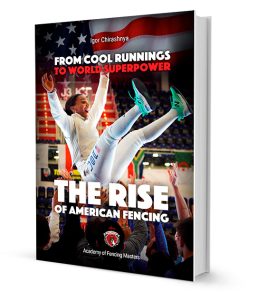
- USA: Significant recent success since beginning of the century, particularly in foil and sabre. I wrote a book analysing what cause the USA to become the World Superpower
- Egypt: The superstar of African continent in fencing and its fencers can grab some medals
- Japan: Rising power in fencing, with notable improvements across all weapons
For expert reading: Read how the USA became World’s Superpower in fencing
To expand your knowledge of key players in other disciplines, read our special editions on Men’s Epee, Women’s Epee, Men’s Foil, Women’s Foil, Men’s Sabre, and Women’s Sabre.
So there you have it – your ultimate guide to Olympic fencing. You’re now ready to wow your friends with your newfound knowledge, or at least fake your way through a conversation at an Olympic watch party. Remember, in fencing as in life, it’s not about how many times you get hit, but how stylishly you get back up and keep fighting. En garde, and may the odds be ever in your favor!



Grounded strips are used for foil *and* epee. Saber uses the same strip but doesn’t *need* to be grounded but is.
A fencer substituted may return to his same position except in some specific circumstances but as a practical matter, isn’t.
Hi R., That’s not how the Olympic Team format works. Once substituted, the alternate can’t be replaced—not in the entire competition. That’s why many countries use alternates ONLY for critical emergencies, and sometimes only three fencers medal.