

In the world of international fencing, a remarkable story has unfolded over the past two decades – one that challenges traditional narratives about gender and sport. While many Olympic sports see men’s events receive greater attention and prestige, American fencing tells a different tale. The meteoric rise of Team USA on the international stage has been led not by men, but by women who have redefined what’s possible with a sword in hand, our American Queens of the strip.
The Golden Revolution
The numbers tell a compelling story. Of the five Olympic gold medals in American fencing history since both genders competed, all have been won by women – Mariel Zagunis captured back-to-back individual sabre golds in 2004 and 2008, while Lee Kiefer claimed individual foil gold in Tokyo and added two more (individual and team) in Paris 2024. This golden dominance represents an extraordinary shift in a sport once considered too aggressive for women to compete in certain weapons.
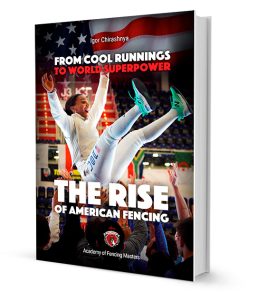
As I detailed in my book “From Cool Runnings to World Superpower,” the transformation of American fencing from international underdog to medal contender began with women breaking barriers. When analyzing Olympic medal counts from 1908-2024, the contrast is stark:
U.S. Olympic Fencing Medals 1908-1999 (91 years): Men – 8, Women – 0
U.S. Olympic Fencing Medals 2000-2024 (24 years): Men – 5, Women – 15
This revolution wasn’t accidental. It emerged from a perfect storm of talent, opportunity, and timing.
Pioneers Who Changed the Game
The watershed moment came in Athens 2004, when women’s sabre made its Olympic debut. American women didn’t just participate – they dominated. Mariel Zagunis claimed gold while Sada Jacobson took bronze, making history as the first American women to reach the Olympic podium in fencing. Four years later in Beijing, the dominance intensified with American women sweeping the individual sabre medals (Zagunis gold, Jacobson silver, Rebecca Ward bronze) and claiming bronze in the team event.
What makes this achievement even more remarkable is that women’s sabre was the last weapon to be included in Olympic competition. For generations, sabre was considered “too aggressive” for women, with the common belief that women’s shoulders were too weak and their torsos too vulnerable for the cutting weapon. American women didn’t just disprove these myths – they turned sabre into their signature event.
The pioneering spirit extended beyond the strip. Janice York Romary became the first woman to participate in six Olympic Games (1948-1968) and the first woman to bear the American flag at an Olympic opening ceremony. Decades later, Mariel Zagunis would become the second female fencer to carry the flag in London 2012.
Beyond the Medal Count
What makes American women’s success in fencing so significant isn’t just the medal haul – it’s how these achievements have transformed perceptions about women’s capabilities in combat sports. The old myths have been thoroughly dispelled, but I still hear a lot of same questions again and again, sometimes even from people who are familiar with fencing:
Is fencing suitable for women? – I’m shocked to to be asked this question again and again from new parents who aren’t sure if fencing accepts girls. Now, when a quarter of the 21st century is behind us! While once marginalized, women have a rich fencing heritage dating back centuries, with American women now writing the most compelling chapters.
Fencing is exceptionally well-suited for women and girls, offering unique advantages rarely found in other sports. The sport balances technical skill, strategic thinking, and athletic ability in a way that neutralizes traditional physical advantages. Fencing’s scoring system rewards precision, timing, and tactical intelligence rather than brute strength. The individualized nature of training allows coaches to develop personalized approaches that leverage each fencer’s unique attributes. With proper coaching, a female fencer can develop a style that capitalizes on her specific strengths, whether that’s exceptional footwork, lightning reflexes, or superior tactical analysis.
Women aren’t as aggressive as men on the strip – Watching Zagunis, Kiefer, the Hurley sisters, and many other women’s attacks reveals the absurdity of this notion. In any club you will see fencing classes and open bouting when girls and boys, women and men, spare together. So go and ask any boy or man that their female opponent beat them, if she was aggressive enough!
Fencing is too violent for women – This often comes as a continuation of the previous question. Like, sure, MMA also is co-ed sport, but isn’t it really dangerous for women to play with the swords? Not only have women proven equally capable in all weapons, but they’ve shown remarkable tactical adaptability. Plus the fencing gear is a saver.
Women’s fencing isn’t as entertaining – The explosive footwork, tactical brilliance, and passionate celebrations of American women fencers have created some of the most memorable fencing moments, and not only in Olympics. In Olympics they just got a world wide coverage and exposure.
The Ripple Effect
The success of American women in fencing has created a virtuous cycle. Young girls seeing our women champions on Olympic podiums now have tangible role models. This representation matters – it transforms abstract potential into concrete possibility.
The “Paris Effect” has been particularly powerful. Lee Kiefer’s historic achievement as the first American triple Olympic gold medalist in fencing has inspired unprecedented interest in the sport. Fencing clubs across America report surging enrollment, particularly among girls who see in Kiefer a reflection of what they might become.
This growing participation creates deeper talent pools, more competitive domestic tournaments, and ultimately stronger international teams. What began as individual breakthroughs has become a sustainable ecosystem of excellence.
The Secret to Success: Mental and Physical Equilibrium
What explains this remarkable female dominance in American fencing? Unlike sports where physical size confers decisive advantages, fencing creates what I’ve called “equal footing” – a perfect balance of mental and physical demands.
Fencing’s unique balance of physical and mental elements creates an environment where technique and strategy often triumph over physical size or strength. Women fencers leverage speed, timing, and tactical creativity to overcome physical disadvantages. This dynamic leads to matches where mental composure and strategic adaptability become the decisive factors. In American fencing clubs, the progress of female athletes demonstrates how precision, agility, and calculated risk-taking can systematically dismantle opponents regardless of gender or physical attributes.
This equilibrium rewards attributes beyond raw power – precisely timed actions, tactical awareness, emotional resilience, and strategic thinking. These qualities transcend gender and create a truly level playing field where women can excel.
Leading From the Front
American women haven’t just dominated on the strip – they’ve shaped the future of fencing through leadership and advocacy. Today, female coaches and administrators continue this legacy, building pathways for the next generation. These women understand that excellence requires not just talent but systems that identify and nurture potential from the grassroots to the elite level.
The Road Ahead: LA 2028 and Beyond
As we look toward the Los Angeles Olympics in 2028, American women fencers stand poised to achieve unprecedented heights on home soil. The momentum is unmistakable – from Kiefer’s historic triple gold to the emerging junior talents ready to make their mark.
For young American fencers today, the question isn’t whether women can compete at the highest levels – it’s how many medals they might win. This shifting mindset represents perhaps the most profound victory of all.
A Legacy of Excellence
The queen’s gambit in chess refers to an aggressive opening move that sacrifices material for future advantage. In many ways, American women fencers have executed their own version of this strategy – challenging conventions, reimagining possibilities, and creating openings for others to follow.
Their success proves something profound about sport and society: when artificial barriers fall, talent rises. The queens of American fencing haven’t just changed their sport – they’ve provided a blueprint for how determination, excellence and opportunity can transform any field.
As fencing continues to grow in America, their legacy reminds us that the most powerful move in any sport isn’t made with the body, but with the mind that first believes achievement is possible.



0 Comments